
Schengen Visa Rules For Us Citizens 2026: Schengen Visa Rules for US Citizens: 2026 Entry Changes and the 90-Day Clock

You land in Paris, hand over your US passport, and the border officer flips through it. No stamp. No questions. You’re waved through in 15 seconds. That’s been the reality for Americans in Europe for decades. In 2026, that changes. Not with a visa, but with a pre-authorization system called ETIAS that catches a lot of travelers off guard.
Here’s the part most people get wrong: US citizens do NOT need a Schengen visa for short stays. Never have. But starting in 2026, you need something else before you fly. And the 90-day rule has teeth that most travelers ignore until they’re standing at a border with an overstay flag on their record.
This guide breaks down exactly what changed, what didn’t, and how to avoid the mistakes that get people denied boarding or banned from re-entry.
What Actually Changed in 2026: ETIAS Is Not a Visa
The single biggest source of confusion is ETIAS (European Travel Information and Authorisation System). People call it a “visa waiver” or a “Europe visa.” It is neither. It’s a pre-screening system that checks your information against security databases before you board a flight to any of the 30 Schengen countries.
Here’s what you actually need to know:
- Cost: €7 (about $7.60 depending on exchange rate)
- Validity: 3 years or until your passport expires, whichever comes first
- Processing time: Most approved in minutes. Some flagged for manual review take up to 96 hours. A small percentage take up to 30 days.
- Application: Online form with passport details, travel history, security questions about criminal records, drug use, and travel to conflict zones
- Who needs it: All US citizens, including children and infants, regardless of age
The application is done through the official ETIAS website or mobile app. Third-party sites charge $50-$100 for the same thing. Don’t use them. The official fee is €7 flat.
One thing border guards won’t tell you: ETIAS approval does not guarantee entry. It gets you on the plane. The border officer still has final say. If you’ve overstayed before, ETIAS won’t save you.
The 90/180 Rule: The Math That Trips Everyone Up

US citizens can stay in the Schengen Area for 90 days within any rolling 180-day period. The key word is rolling. It’s not 90 days per calendar year. It’s not 90 days per trip. It’s a moving window that looks back 180 days from any given day you’re in the zone.
Here’s how it actually works:
- Day 1 of your first entry starts the clock
- Every day you’re physically inside Schengen counts, including arrival and departure days
- After you leave, the 180-day window keeps moving forward
- To re-enter, you count backward 180 days from your planned entry date and add up all days spent inside
Example: You spend June 1 to August 29 in Italy (90 days). You leave. You want to return for Christmas. Count back 180 days from December 20. That window includes your entire summer trip. You’ve used 90 of 90 days. You cannot re-enter until enough days from the summer trip fall outside the 180-day window. In practice, you’d need to wait until late November or early December before the math works.
The European Commission provides an official Schengen calculator. Use it. Don’t do mental math at the airport. Border guards use the same calculator, and they don’t round in your favor.
Common Overstay Mistakes
Travelers get flagged for three reasons, in order of frequency:
- Counting calendar months instead of days. “June to August” is not 90 days. It’s 90 days only if you arrive June 1 and leave August 29. Arrive June 5 and leave September 2? That’s 90 days. But arrive June 5 and leave September 3? That’s 91. Overstay.
- Ignoring the rolling window. A 90-day trip in spring doesn’t reset on January 1. It haunts you for 180 days after each day you were there.
- Assuming airport transit doesn’t count. If you change planes in Frankfurt en route to Turkey, and you pass through passport control, those hours count as days inside Schengen.
Which Countries Are in Schengen vs. the EU
This is where even experienced travelers get confused. The EU and Schengen are not the same thing. Ireland is in the EU but not Schengen. Norway and Switzerland are in Schengen but not the EU. The UK is in neither.
For a US citizen, the practical implications are significant:
- Ireland: Not in Schengen. Time spent there does not count against your 90 days. You can fly from Dublin to Paris and your Schengen clock only starts when you land in Paris.
- UK: Not in Schengen. Separate rules. US citizens get 6 months visa-free. Time in the UK doesn’t touch your Schengen allowance.
- Bulgaria and Romania: Fully in Schengen as of January 2026. Time there now counts toward your 90 days. This is a recent change that catches people who used to use Sofia or Bucharest as a “Schengen reset” destination. That loophole is closed.
- Croatia: In Schengen since 2026. Counts toward the 90 days.
The strategic play for long-term travelers: use the UK and Ireland as buffer zones. Spend 90 days in Schengen, then 90 days in the UK or Ireland, then re-enter Schengen. The math works because those countries don’t count toward your Schengen allowance. But you need to actually be in those countries, not just claim you were. Border guards can ask for proof.
What Border Guards Actually Check in 2026
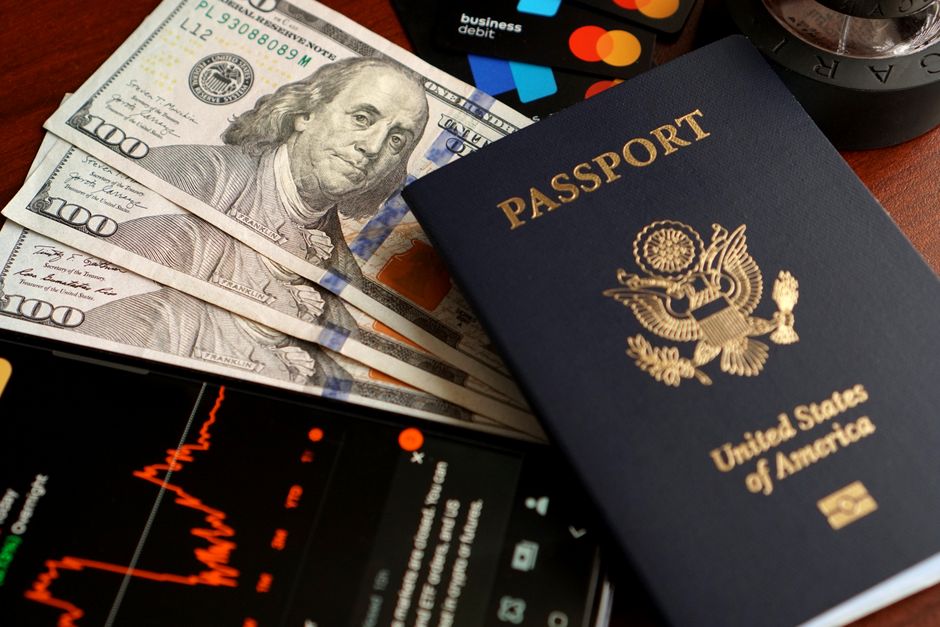
With the Entry/Exit System (EES) fully operational, border control has changed. Your passport is scanned. Your fingerprints and facial photo are captured. Your entry and exit dates are logged digitally. No more relying on illegible stamps.
What this means in practice:
- Overstays are detected automatically. The system flags you the moment you try to enter again.
- Your ETIAS status is checked electronically before you board your flight, not just at the border
- Border officers can see your full travel history across all Schengen countries, not just the one you’re entering
Here’s what they’re looking for:
- Proof of onward travel (return ticket or ticket to a non-Schengen country)
- Proof of accommodation (hotel booking, rental agreement, or a letter from a host)
- Proof of sufficient funds (roughly €45-€100 per day depending on country)
- Travel insurance with at least €30,000 in medical coverage (not legally required for US citizens, but asked for in practice)
The most common denial reason for US citizens is not overstaying. It’s showing up without proof of onward travel. A one-way ticket into Schengen with no exit plan is a red flag. Buy a refundable onward ticket if your plans are flexible.
ETIAS Application: Step-by-Step Without Getting Scammed
The application takes about 10 minutes. You need your passport, an email address, and a credit or debit card for the €7 fee. Here’s the exact process:
- Go to the official ETIAS website (etias.europa.eu) or download the official mobile app
- Enter your passport details exactly as they appear on the bio page
- Answer security questions about criminal history, drug use, terrorism, and travel to conflict zones
- Enter your first intended country of arrival (you can change this later, it’s not binding)
- Pay €7 with a credit card
- Receive approval via email, usually within minutes
Failure mode: Third-party sites. Search “ETIAS application” on Google and the top results are often unofficial agencies charging $49-$99 for the same form. They’re not scams in the legal sense, but they add zero value. The official fee is €7. Period.
Another failure mode: entering your passport number wrong. One digit off and your ETIAS won’t match your passport at the gate. You’ll be denied boarding. Double-check every field.
One more: if you get a new passport, your ETIAS dies with the old one. You need a new application. The approval is tied to the passport number, not to you as a person.
Long-Term Stays: When You Actually Need a Real Visa

ETIAS and the 90-day rule cover tourism, business meetings, and short family visits. They do not cover:
- Studying for more than 90 days
- Working remotely for a US company while living in Europe (digital nomad work)
- Getting married and settling in a Schengen country
- Any stay longer than 90 days in a 180-day period
For these situations, you need a national visa from the specific country you’re targeting. Each country has its own rules:
- France: Long-stay visa (visa de long séjour) for stays over 90 days. Requires proof of income, accommodation, and health insurance.
- Germany: National visa (D visa) for work, study, or family reunification. Processing takes 1-3 months.
- Spain: Non-lucrative visa for retirees or remote workers with sufficient passive income. Requires proof of €28,800+ per year in savings or income.
- Portugal: D7 visa for passive income earners. Lower threshold than Spain, around €9,840 per year.
- Italy: Elective residence visa for those with substantial passive income. Requires proof of €31,000+ per year.
These are long, bureaucratic processes. Budget 3-6 months for approval. You cannot apply for these from inside the Schengen Area on a tourist stay. You must apply from your home country or a country where you have legal residence.
The digital nomad trap: many Americans think they can work remotely on a 90-day tourist stay because “nobody will know.” In 2026, with EES tracking entries and exits, and with tax authorities increasingly sharing data, this is a genuine risk. Countries like Portugal and Spain now offer specific digital nomad visas. If you plan to work remotely from Europe, get the right visa. The penalties for working on a tourist visa include fines, deportation, and multi-year entry bans.
The 90-Day Reset Myth and Other Misconceptions
Let’s kill the most persistent myths about Schengen rules for US citizens.
Myth: “I can leave for a weekend and reset my 90 days.”
No. Leaving for a weekend in London or Morocco does not reset anything. The 180-day window is rolling. A weekend outside Schengen just pauses the clock. You still have the same total allowance.
Myth: “Marrying an EU citizen gives me automatic residency.”
No. Marriage to an EU citizen gives you a path to residency, but you still need to apply for the residence permit. You don’t get to skip the line. And you can’t just stay past 90 days while the paperwork processes.
Myth: “ETIAS is a visa and I need to apply months in advance.”
ETIAS is not a visa. Most approvals come in minutes. Applying 72 hours before your flight is sufficient for the vast majority of travelers. The 30-day worst-case scenario applies to people flagged for additional security checks due to travel history or name matches on watchlists.
Myth: “The 90-day limit is per country.”
No. It’s 90 days total across all 30 Schengen countries combined. Spending 60 days in France and 60 days in Spain in the same 180-day window is 120 days. Overstay.
If you’re planning a multi-month Europe trip, the math matters more than the itinerary. Use the official calculator. Plan your exit to a non-Schengen country before your 90 days run out. The UK, Ireland, Albania, Montenegro, and Turkey are all non-Schengen options within easy reach.
Bottom line: For US citizens, the 2026 Schengen changes are procedural, not substantive. You still don’t need a visa for short stays. You still get 90 days. But you now need ETIAS approval before you fly, and the Entry/Exit System means overstays are caught automatically. The rules haven’t gotten stricter. The enforcement has.






0