Why I don’t think Ubud deserves the hype
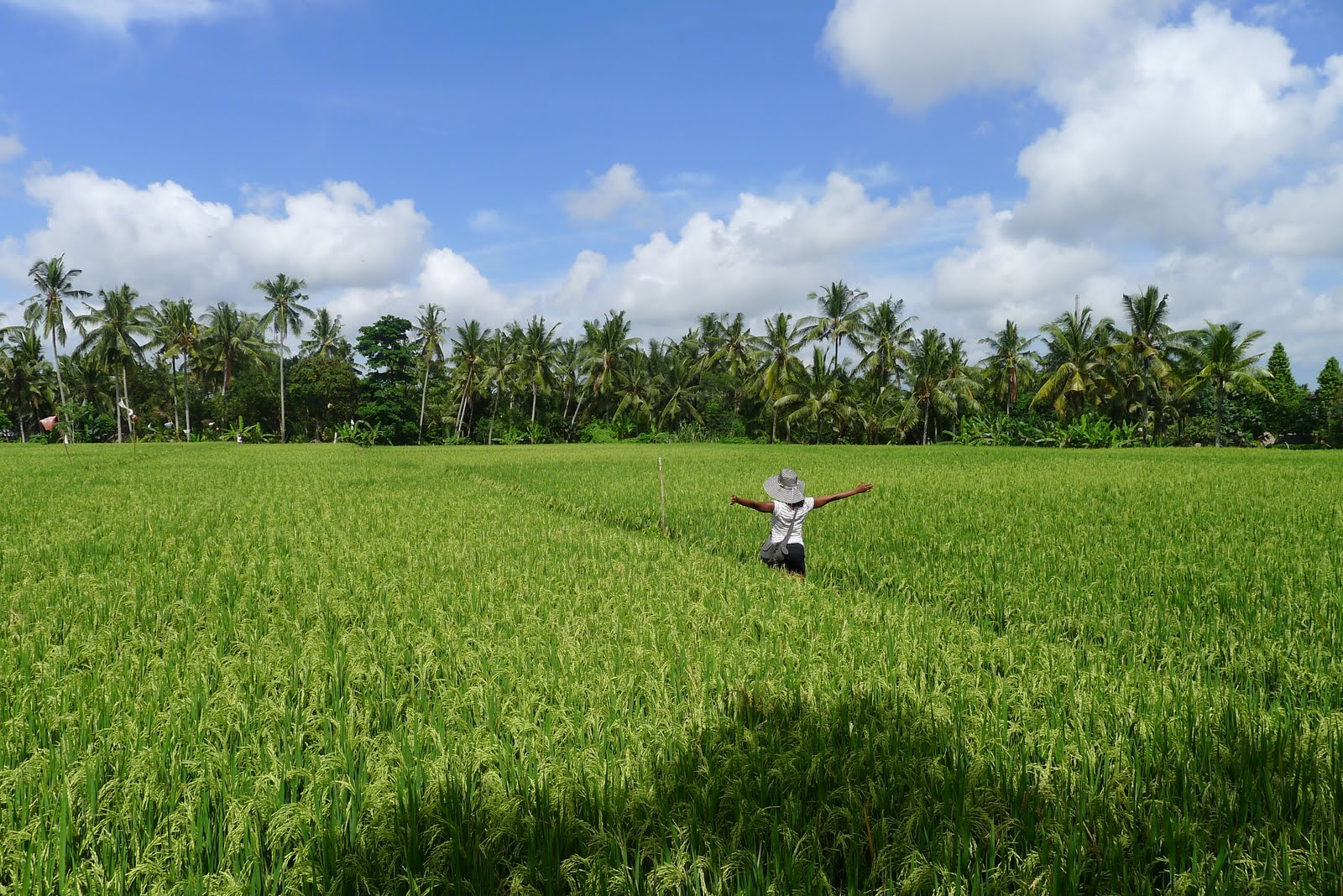
Over 3 million tourists passed through Ubud in 2026. The town’s central road, Jalan Raya Ubud, handles an estimated 15,000 vehicles a day on a street built for far fewer. The rice field photos that convinced you to book were largely taken before 7am, between 2015 and 2018.
That’s not bitterness. That’s the gap between the Ubud being sold and the one you’ll actually walk into.
The Crowd Problem Nobody Warns You About
Ubud’s core attractions — rice terraces, Hindu temples, traditional dance, morning markets — are real and worth seeing. The problem is that every one of them now happens inside a mass of people who found the same content, booked the same flights, and arrived with the same idea.
The Campuhan Ridge Walk, once a quiet 2km path above forested ravines, now has a queue to start it on weekend mornings. The Sacred Monkey Forest Sanctuary holds over 700 long-tailed macaques and, on busy days, processes roughly 3,000 visitors. Goa Gajah, the elephant cave temple, receives over 1,500 tourists daily. That’s one person entering every 30 seconds from open to close.
How Did This Happen?
Ubud has been building toward this for a decade. Elizabeth Gilbert’s Eat Pray Love created the template in 2006. The wellness tourism boom of the mid-2010s layered on top. Then Bali’s post-COVID surge compressed what used to be shoulder seasons into months that are merely slightly less crowded than peak.
Peak season runs May through October. But the international holiday calendar has eaten into the gaps — Chinese New Year, Australian school breaks, European summer and winter holidays. Ubud no longer has a real off-season. It has a “less bad” season, which runs roughly November through early January, excluding Christmas week.
What the Booking Situation Looks Like
Good accommodation — meaning anything with a rice field view, a proper pool, and some insulation from street noise — books 4–6 months out for peak dates. Komaneka at Bisma on Jalan Bisma starts at $350/night and fills early. COMO Shambhala Estate in Banjar Begawan opens at $600/night. Mid-range places in the $80–150 range tend to sit on or near the main road, which means trading views for the sound of motorbikes at 6am.
The crowd problem is technically solvable — if you’re willing to wake at 5:30am every day, have complete date flexibility, and budget for the premium the Ubud brand commands. If those conditions don’t apply to your trip, you’ll spend a meaningful chunk of your holiday waiting in line or sitting in traffic for experiences that exist better and cheaper elsewhere.
Tegallalang Rice Terrace Now Charges 50,000 IDR to Enter and Has a Zip Line
Entry is 50,000 IDR ($3). Inside: coffee shops, souvenir stalls, swing rental stations, zip-line operators, and roving photographers offering to take your picture for a fee — all built directly into the terrace area. The rice terraces themselves are genuine. The setting around them is an outdoor commercial park. Getting the clean shot you’ve seen online requires cropping out roughly six other photographers framing the same image from the same spot.
The Wellness Industry in Ubud Has Gone Completely Corporate
Ubud built its global reputation on a specific promise: genuine spiritual renewal, connected to Balinese Hindu tradition, available without being wealthy. That was partly true until around 2016. Since then it has become mostly marketing infrastructure.
A traditional Balinese healer visit (balian) used to involve an offering and a voluntary donation — maybe 100,000–200,000 IDR. Wellness centers in Ubud now book “energy healing sessions” for $80–150/hour, packaged specifically for Western tourists, with online booking systems and English-language intake forms. That’s not automatically wrong. It’s just a long way from the village-level healing tradition the brochures are invoking.
Fivelements Retreat Bali, positioned on the Ayung River with a genuine commitment to Balinese healing arts, charges from $700/night. It’s a quality property. But nothing about it resembles the affordable spiritual escape that the Ubud mythology was built on.
What Authentic Balinese Culture Actually Looks Like
The Pura Dalem Ubud and Pura Taman Saraswati temples host legitimate kecak and legong dance performances most evenings for 100,000–150,000 IDR ($6–9). The Agung Rai Museum of Art on Jalan Raya Pengosekan has an actual collection of Balinese and Indonesian painting, not a gift shop dressed as a gallery. These exist and are worthwhile.
But the genuine Balinese spiritual calendar — odalan temple ceremonies, Galungan processions, the extraordinary silence of Nyepi day — happens across all of Bali, not just Ubud. You don’t need to be in Ubud to access Balinese culture. You need to be in Bali at the right time and in the right village. No itinerary built around Ubud’s wellness market will get you there.
Where Wellness Still Feels Real
The Tjampuhan Spa at Tjampuhan Hotel — one of Ubud’s older and more grounded properties — uses traditional Balinese techniques and charges $30–50 for treatments. Yoga studios in Munduk, in Bali’s northern highlands at 900 meters elevation, run drop-in classes for $8–12 against a backdrop that has nothing to do with a content calendar. Neither carries the Ubud premium. Both deliver what the premium claims to include.
The honest summary: Ubud has fragments of genuine cultural depth buried under considerable commercial noise. If you’re prepared to find those fragments, they exist. If you arrived expecting the mythology intact, you’ll be disappointed.
Ubud’s Location Creates a Traffic Trap for Your Entire Trip
Ubud sits 30km north of the airport and the south coast beaches. On paper, that sounds manageable. On Bali’s roads, in Bali’s traffic, it translates to 1.5–2 hours each direction for a beach day.
Hiring a private driver from Ubud costs 400,000–600,000 IDR ($25–37) for a full day — reasonable and fair. But factor in the dead time: a 7am departure to reach Tanah Lot by 8:30am, a 4pm departure to get back before dinner. That’s roughly three hours in a car for a half-day of actual activity. Do that twice on a week-long trip and you’ve spent most of a full day sitting in a vehicle going somewhere and returning.
Base yourself in Seminyak or Canggu and the calculation inverts. Tanah Lot is 20–30 minutes. The airport is 15 minutes. Seminyak Beach is a 5-minute walk. Ubud becomes a perfectly reasonable day trip — 90 minutes each way, see the morning market, do the rice terraces, drive back before sunset. You get the Ubud experience without the Ubud overhead.
The math only tips in Ubud’s favor if you plan to stay put — cooking classes, a yoga retreat, walks through the rice field neighborhoods. The moment your itinerary includes beach days, south coast temples, or Uluwatu, the location starts costing you more than it gives you.
What You Pay in Ubud vs. What You Actually Get
| Experience | Ubud Price | Comparable Elsewhere in Bali | Verdict |
|---|---|---|---|
| Mid-range hotel (rice field view, pool) | $100–180/night | $60–100 in Sidemen or Munduk | Ubud charges a brand premium |
| Full-day private driver | $30–40 | $25–35 from Canggu | Similar price; Canggu saves 2–3 hrs in transit daily |
| Traditional massage, 60 min | $15–25 (tourist streets) | $8–14 in Lovina or Singaraja | Significant tourist markup in central Ubud |
| Cooking class with market visit | $35–55 | $25–45 in Jimbaran | Similar quality at lower price outside Ubud |
| Temple entry fees | $3–8 per site | Free–$2 at village temples | Ubud’s temple economy is monetized at scale |
| Yoga drop-in class | $12–22 | $8–14 in Canggu | Prestige pricing for largely equivalent instruction |
None of these prices are shocking by international standards. Bali is still inexpensive relative to most Western cities. But the gap between what you pay and what you receive has closed considerably as Ubud’s demand has scaled up and its supply of authenticity has scaled down.
Better Alternatives — Matched to What You Were Actually After
You Want Rice Terraces Without the Commercial Park Around Them
Jatiluwih, a UNESCO World Heritage Site about 45 minutes west of Ubud, has terrace systems stretching for kilometers across volcanic hillside. Entry: 40,000 IDR. On a Tuesday morning in low season, you can walk for an hour and encounter fewer than 20 other people. The subak irrigation cooperative here — the actual system UNESCO designated — is still functioning as a traditional agricultural institution, not a backdrop for content creation.
Sidemen Valley in East Bali offers rice fields against the backdrop of Mount Agung. Accommodation with views runs $50–90/night. It’s a 90-minute drive from central Ubud and feels like what people imagined Ubud was in 2005.
You Want Mountains, Cooler Air, and Actual Hiking
Munduk sits at 900 meters elevation — genuinely cooler than Ubud, which sits at 300–400m and turns humid by afternoon. The area has clove plantations, coffee groves, and the twin lakes of Tamblingan and Buyan. Hiking here means trails through working farmland, not a ridge walk turned into a tourist corridor. Accommodation runs $40–90/night. It’s not infrastructure-rich, but that’s precisely the point.
You Want Temples That Don’t Feel Like Theme Parks
Tirta Gangga in East Bali — a former royal water palace with stepped pools and lotus ponds — charges 50,000 IDR and is genuinely beautiful without the commercial apparatus surrounding Ubud’s sites. The nearby village of Tenganan is one of Bali’s Bali Aga communities: pre-Hindu indigenous villages with a distinct double ikat weaving tradition and a social structure that has no equivalent in the Ubud tourist market. Tenganan also holds the Perang Pandan festival each June — a traditional pandanus war ceremony attended primarily by community members, with no ticketing infrastructure and no selfie stations. Entry to the village involves a small voluntary donation.
When Ubud Still Makes Sense
This is not a case to skip Ubud entirely. There are specific situations where it’s clearly the right answer.
- You’re doing a dedicated cooking class. Casa Luna — founded by Janet DeNeefe, one of Bali’s most respected culinary voices — and Paon Bali both run legitimately excellent, well-structured programs. Ubud has the best concentration of quality Balinese cooking instruction on the island. For this purpose specifically, it’s the correct base.
- You’re staying 10 or more days and can move at your own pace. A longer trip lets you find the quiet edges — Pura Tirta Empul before the tour buses at 7am, weekday afternoons in the outer rice field neighborhoods near Penestanan. Ubud rewards patience that a 5-night itinerary simply cannot accommodate.
- You want high-end wellness and budget isn’t the constraint. COMO Shambhala Estate and Fivelements Retreat genuinely deliver at their price points. If either of those is the specific goal, Ubud is the right geography — there is nowhere else in Bali where this tier of wellness product is concentrated.
- You’re visiting between November and mid-December. Crowds thin meaningfully. The green season brings lush landscapes and afternoon rain that usually clears by evening. This is the version of Ubud that comes closest to matching the reputation it built.
- It’s your first trip to Bali and logistics feel overwhelming. Ubud has the island’s most developed tourist infrastructure — English spoken widely, transport easy to arrange, food options extensive at every budget level. That navigability has genuine value for first-time visitors to Indonesia.
Bali tourism is slowly shifting. More travelers are researching past the Ubud headline and finding the island’s less-packaged corners — East Bali’s black-sand coastline, the Buleleng regency in the north, Nusa Penida for diving and dramatic cliff scenery. As that distribution continues and visitor pressure spreads more evenly across the island, the version of Ubud that earned its reputation may gradually become findable again — without requiring a 5am alarm and a high tolerance for queues.