
Travel Rewards for Mexico: Which Programs Actually Deliver

You’ve got 80,000 Chase Ultimate Rewards points, a week off in February, and Cancún is calling. The question isn’t whether your points are worth anything — it’s about to spend them in a way you’ll regret six months later.
Mexico is one of the strongest destinations for rewards redemptions in North America. Used wrong, those same 80,000 points get you a $400 economy flight you could have booked in cash for $310. Used right, they cover a round-trip business class fare or five nights at a beachfront Hyatt that would have cost $700 out of pocket.
This guide covers the specific programs, cards, and mechanics that actually work for Mexico in 2026 — including where the math breaks down and when cash is genuinely the smarter call.
How the Major Rewards Programs Stack Up for Mexico
Not every program treats Mexico equally. Some airlines use distance-based award pricing — good for short US border hops. Others use zone charts that make flights to the Yucatán surprisingly cheap or absurdly expensive depending on the carrier. Here’s the honest comparison.
| Program | Best Use Case for Mexico | Approx. Points for US–Mexico Flight (one way) | Verdict |
|---|---|---|---|
| Chase Ultimate Rewards | Flexible transfers to United, Hyatt, Southwest | 15,000–25,000 pts via United transfer | Most versatile starting point |
| World of Hyatt | Luxury hotels in CDMX, Riviera Maya, Los Cabos | N/A (hotel program) | Best overall hotel value in Mexico |
| Amex Membership Rewards | Transfer to Aeromexico for premium cabin | 40,000–60,000 for business via Club Premier | Strong for premium seats |
| United MileagePlus | Economy from US gateway cities | 12,500–17,500 miles | Decent on nonstop routes |
| American Airlines AAdvantage | Mexico City, Guadalajara, direct AA routes | 12,500–20,000 miles | Good where AA flies nonstop |
| Aeromexico Club Premier | Domestic Mexico connections | 6,000–15,000 km for domestic legs | Underused by US travelers |
| Marriott Bonvoy | Mid-range hotels across Mexico | N/A (hotel program) | Fine, but worse value than Hyatt |
| Capital One Miles | Erase cash travel purchases | 1 cent per mile, no transfer needed | Simple but leaves value on the table |
The clear winning combination: Chase Ultimate Rewards paired with World of Hyatt. Chase handles flight flexibility across multiple airlines; Hyatt handles hotel redemptions at a value level no competing program matches in the Mexican beach resort market.
Why Aeromexico Club Premier Deserves More Attention
Most US-based travelers ignore Club Premier because building points there requires a transfer step — American Express Membership Rewards transfers to Club Premier at 1:1, and occasionally at 1:1.6 during promotional windows. But if your itinerary includes connecting within Mexico — say, flying into Mexico City and onward to Oaxaca or Mérida — domestic award prices are genuinely low. A one-way domestic Mexican flight can run as few as 6,000 pesos (their points unit). For anyone doing a multi-city Mexico trip, this program saves real money on legs that often cost $120–$180 in cash.
Hotel Programs: The Hyatt Gap Is Bigger Than People Think
World of Hyatt consistently returns 1.5–2.5 cents per point on Mexican resort properties. Marriott Bonvoy properties are more numerous across Mexico, which matters in smaller cities — but for Cancún, Los Cabos, and Mexico City, Hyatt’s per-point value is noticeably better. If you hold both currencies, spend Hyatt first in Mexico.
Five Credit Cards Worth Holding for Mexico Travel

The card you carry matters less than whether its points transfer to programs that serve Mexico routes. These are the specific cards worth keeping in your wallet if Mexico is a regular destination.
- Chase Sapphire Reserve ($550/year) — Earns 3x on travel and dining. Transfers 1:1 to United, Southwest, Hyatt, Air Canada Aeroplan, and others. The $300 annual travel credit drops the effective fee to $250. Best pick if you want maximum partner flexibility and fly multiple airlines to Mexico.
- Chase Sapphire Preferred ($95/year) — Same transfer partners as the Reserve at a fraction of the cost. Earns 3x on dining, 2x on travel. For travelers who don’t need airport lounge access, this returns better value per dollar of annual fee.
- American Express Gold ($250/year) — 4x at restaurants and US supermarkets, which accelerates earning fast. Transfers to Aeromexico Club Premier and Delta SkyMiles. Particularly useful if your Mexico flights connect through a Delta hub like Atlanta or Los Angeles.
- Capital One Venture X ($395/year) — Flat 2x on all purchases plus transfer partners including Avianca LifeMiles, which has solid award space on United-operated Mexico routes. The $300 annual travel credit and 10,000 anniversary bonus miles offset most of the fee for frequent travelers.
- World of Hyatt Credit Card ($95/year) — Earns Hyatt points directly at 4x on Hyatt purchases, 2x on dining, airlines, and transit. If your Mexico plan centers on a Hyatt all-inclusive stay, this card builds points faster than transferring from Chase.
A practical note: sign-up bonuses do more acceleration than a year of everyday spending. The Chase Sapphire Preferred welcome offer — typically 60,000–80,000 points after hitting a spend requirement — alone covers a round trip to Mexico or four to five nights at a Category 4 Hyatt property.
Don’t try to maintain five reward currencies simultaneously. Pick one transferable points currency (Chase or Amex) and one hotel program (Hyatt, ideally). That’s all most Mexico-focused travelers actually need.
How to Book a Flight to Mexico with Miles Without Wasting Them
Knowing which programs have value is step one. Actually completing the booking is where most people get stuck — or worse, move points into an airline account only to discover the award space they wanted was never there.
The core mechanic: transferable points in Chase or Amex sit in a central account until you deliberately move them to an airline or hotel. Once transferred, they become that program’s currency permanently. You can’t bring them back. So the rule is absolute: confirm award availability before you transfer a single point.
Step 1: Find Saver Award Space Before Moving Anything
Use United.com or AA.com to search for award availability on your target route and dates. You’re looking specifically for saver-level inventory — these require the fewest miles and correspond to the standard award charts. If United is only showing “MileagePlus Advantage” fares rather than saver space, the cost jumps significantly. Saver space is limited; premium cabin saver space is more limited still. For flights to Cancún, Los Cabos, or Mexico City from major US hubs (Houston, Dallas, Miami, New York, LA), nonstop routes usually have reasonable saver availability, especially 30–60 days out.
Step 2: Check for Transfer Bonuses Before Moving Points
Both Chase and Amex run periodic transfer bonuses — 25–40% extra miles when you move points to specific airline partners during a promotional window. American Express to Aeromexico Club Premier has historically offered 30% bonuses. Air Canada Aeroplan, which books Star Alliance flights including United-operated Mexico routes, runs them periodically too.
Waiting for a transfer bonus can turn 30,000 points into 39,000 with zero extra spending. On a business class redemption requiring 60,000 miles, that gap pays for an upgrade or a domestic connection. If your travel dates are flexible by a few weeks, a bonus window is worth watching for.
Step 3: Run the Cents-Per-Mile Math Before Committing
Divide the cash ticket price by the miles required to calculate cents per mile. A 25,000-mile redemption for a flight priced at $400 cash = 1.6 cents per mile. Chase Ultimate Rewards points are worth roughly 1.5–2 cents each when transferred to airline partners. If your redemption falls below 1.5 cents per mile, you’re often better off booking cash and saving those points for a higher-value opportunity.
Business class flips this math entirely. A business class seat from New York to Cancún priced at $2,800 cash but bookable for 45,000 United miles = 6.2 cents per mile. That’s where award redemptions stop being a math exercise and start being a straightforward win.
Hotel Points in Mexico: Where You Actually Get Value
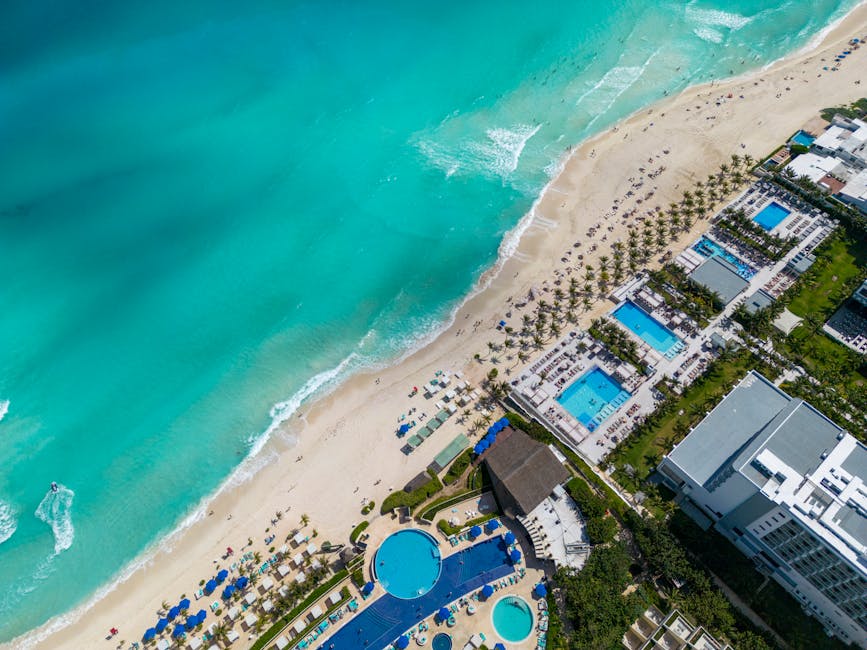
World of Hyatt is the clear choice for Mexican resort properties, and it’s not particularly close.
The Hyatt Zilara Cancún and Hyatt Ziva Cancún are all-inclusive resorts that redeem for 30,000–40,000 Hyatt points per night. Cash rates including food, drinks, and activities run $400–$600 per night. That puts the effective value at 1.3–2 cents per point — exceptional by any program’s standards, and the only place in the major hotel programs where an all-inclusive property is accessible through points at competitive rates.
For Mexico City, the Andaz México City Condesa runs 18,000–25,000 Hyatt points per night, with cash prices between $250–$380. The Park Hyatt Aviara near Los Cabos prices at 25,000–30,000 points for rooms running $450–$600 in cash.
Marriott Bonvoy in Mexico isn’t bad in absolute terms — the JW Marriott Los Cabos and the St. Regis Punta Mita are legitimate properties. But you’ll typically need 50,000–70,000 Bonvoy points for rooms priced similarly to what Hyatt charges 25,000–35,000 for. Marriott wins on hotel count across smaller Mexican cities where Hyatt simply doesn’t operate.
Mistakes That Cost Real Redemption Value
These five errors come up constantly, and each one is avoidable with five minutes of planning:
- Transferring before confirming availability. Award space disappears. Transfer only after you’ve verified the specific flight, date, and cabin class has saver inventory.
- Redeeming points for cheap economy fares. A $220 round-trip cash fare to Cancún is not worth 22,000 miles at 1 cent per point. Pay cash, save the miles for a $2,000+ redemption.
- Using hotel points where cash is low. Budget and mid-range accommodation in Mexico runs genuinely cheap — boutique hotels in Oaxaca City at $70–$100/night don’t need to be paid in points. Reserve Hyatt points for all-inclusive resorts and properties above $300/night.
- Skipping Aeromexico for domestic Mexican legs. US travelers build Chase and Amex points and forget that Aeromexico Club Premier exists for domestic routing within Mexico. For a multi-city trip, those domestic legs add up fast in cash.
- Letting points expire silently. World of Hyatt points expire after 24 months of account inactivity. United MileagePlus miles expire after 18 months of no activity. A single small Hyatt booking or one United flight resets the clock. Don’t lose thousands of points to an administrative oversight.
Putting It Together: Specific Mexico Scenarios

Which program should I start with if I have none?
Chase Ultimate Rewards. It transfers to the most useful partners for Mexico — United for flights, Hyatt for hotels, Southwest if you’re routing through US connections. A single Chase Sapphire Preferred welcome bonus gives you enough points to fund a round-trip flight and a couple of Hyatt nights in one shot.
Is booking an all-inclusive with points actually worth it?
Yes, specifically at Hyatt Zilara and Hyatt Ziva properties. These are the only major all-inclusive brands fully integrated into a transferable points program at competitive rates. At 30,000–40,000 Hyatt points per night for a room that includes all meals and drinks, the math returns 1.5–2 cents per point when cash rates are $400+. That’s one of the better redemptions in the entire Hyatt portfolio anywhere in the world.
Beach destination versus Mexico City — does it change the strategy?
Yes. Mexico City cash hotel rates are lower overall, which makes points redemptions less compelling on a pure math basis — the exception being the Andaz Condesa, where premium pricing makes Hyatt points worthwhile. For beach destinations where room rates run $350–$600 per night in season — Cancún, Los Cabos, Puerto Vallarta, Tulum — points deliver their highest value. That’s where using rewards instead of cash creates the biggest actual savings.
The specific recommendation for most travelers: build Hyatt points via Chase Sapphire Preferred transfers (1:1 ratio) and target the Hyatt Zilara or Ziva for a Riviera Maya stay. Book your US–Mexico flight with United MileagePlus miles transferred from Chase, prioritizing nonstop routes. That combination reliably returns 1.8–2.5 cents per point across the full trip — significantly better than any domestic US redemption with the same currency.






0