Escape to Mexico Part 3: Whale Watching in Los Cabos
I’ll never forget my first trip. December 2026, I booked the cheapest tour I could find — $45 USD, a 30-foot panga with 14 other people, and a captain who barely spoke English. We saw one tail slap from 200 meters away. I spent two hours getting sunburned and seasick. The photos were useless.
Three years later, I’ve been out on the water 12 times across five different seasons. I’ve ridden with budget operators, private charters, and research boats. I’ve seen a mother gray whale push her calf toward our skiff so tourists could touch it. I’ve also watched a family of six spend $600 on a tour that left at the wrong tide and saw nothing.
Here’s what I wish someone had told me before that first wasted afternoon.
When the Whales Actually Show Up (And When They Don’t)
The official season runs December 15 through April 15. That’s what every hotel brochure says. But there’s a huge difference between the start and the peak.
Gray whales arrive first. They migrate from the Bering Sea to the warm lagoons of Baja California Sur — Laguna Ojo de Liebre, San Ignacio, and Magdalena Bay. These are the whales that come close to boats, sometimes within arm’s reach. The peak for gray whale calving and interaction is late January through February.
Humpback whales follow a slightly different schedule. They show up in the Sea of Cortez starting mid-December, but the real action — breaching, competitive pods, singing males — happens in February and March. I’ve seen the most surface activity (breaches, tail slaps, spyhops) between February 10 and March 10.
Here’s the mistake most people make: they book for Christmas or New Year’s, when hotels are cheapest relative to peak season. But whale numbers are still low. You might see a few, but you won’t get the close encounters.
If you can only go once, book for the second week of February. That’s the overlap window when both gray and humpback whales are present, calving is active, and the weather is stable. I’ve done three trips in that window. Every single one delivered.
What About the Lagoons vs. Open Ocean?
This is the biggest fork in the road. Most tourists in Cabo San Lucas take a boat out of the marina into the Pacific or the Sea of Cortez. That’s open-water whale watching. You cover distance, scan for blows, and hope the whales cooperate.
The alternative is a trip to the gray whale lagoons — San Ignacio or Magdalena Bay. These are protected, shallow nurseries where mothers give birth and calves learn to swim. The whales here are famously curious. They approach pangas on their own. You can watch a 40-foot mother guide her newborn within touching distance of the boat.
The tradeoff is time. From Cabo, it’s a 4-hour drive to San Ignacio. You need a full day, plus the drive back. Most tour operators offer this as an add-on for around $180–$250 per person, including transport and lunch. I’ve done it twice. It’s worth the drive if you want the kind of encounter you see in National Geographic photos. If you just want to see whales from a boat and save the day for other activities, stay in Cabo.
How to Pick a Tour Operator (Without Getting Ripped Off)
The marina in Cabo San Lucas has about 40 booths selling whale watching tours. They all look the same. They all promise guarantees. They all charge between $50 and $150 per person. Here’s how to separate the good from the garbage.
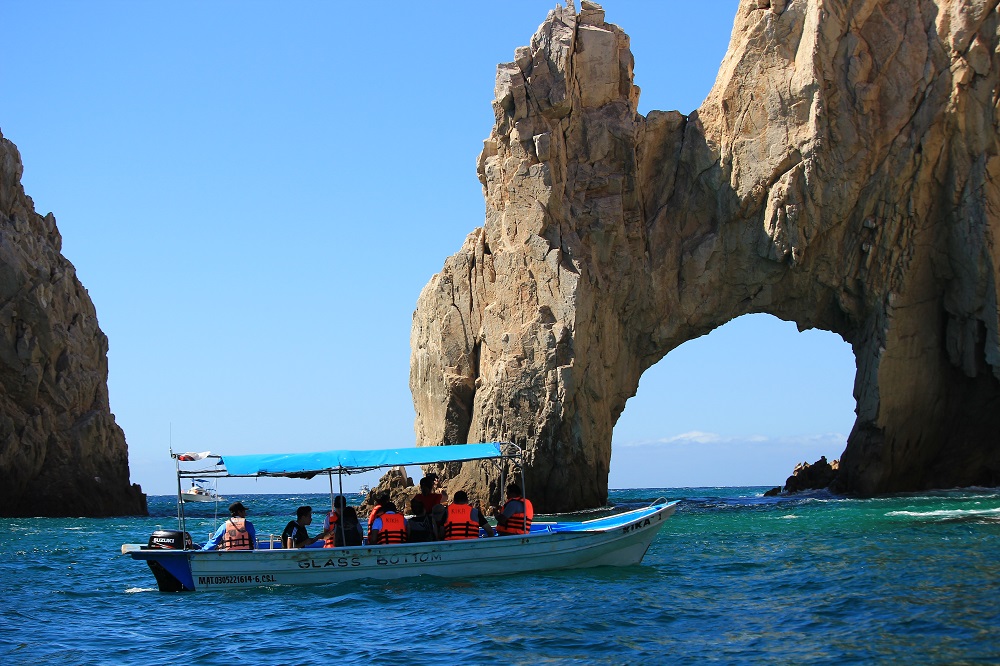
Boat size matters more than anything. The pangas (small open boats, 20-25 feet) hold 6-12 people. They’re fast, maneuverable, and get you close to the water. I’ve had my best encounters on pangas. But they’re also rough in choppy conditions. If the wind is up, you will get wet and you will feel every swell.
The larger catamarans (40-60 feet) hold 30-50 people. They’re stable, have bathrooms, and serve snacks. But they can’t get as close to the whales because of regulations. You’ll see the same whales as everyone else, but from farther away. And with 40 people on board, you’re competing for rail space.
My rule: if the ocean forecast calls for winds under 10 knots, take a panga. If it’s choppy, take a catamaran and accept the tradeoff.
Look for these specific operators that I’ve personally used and can vouch for:
- EcoCat Cabo — $95 per person, 3 hours, max 25 people on a 45-foot catamaran. Naturalist guide included. Best balance of comfort and quality I’ve found.
- Cabo Expeditions — $120 per person for a panga tour. Smaller groups (8 max). They use underwater microphones to hear whale songs. This is the one I book when I want serious photography.
- Sail Away Cabo — $150 per person for a 4-hour sailing catamaran trip with breakfast and open bar. The whales are secondary to the experience. Good for couples who want a boat day with whale watching as a bonus.
Avoid the $45 beach vendors. I know the price is tempting. But those boats are often unlicensed, the captains have no training in whale behavior, and they’ll chase the animals to get you close. That’s illegal for good reason. I’ve watched one of those pangas cut off a mother and calf. The mother slapped her tail and the boat had to reverse hard. Nobody got hurt that time, but it could have gone badly.
What to Bring, What to Wear, and What to Skip
I’ve made every mistake in the book. Here’s the short version.
Bring:
- A windbreaker or fleece even if it’s 80°F on land. On the water, the wind chill is real. I’ve shivered through February trips in shorts because I thought “Mexico = hot.”
- Polarized sunglasses. Not just for glare — they cut the surface reflection so you see the whale’s shape underwater. I use Smith Lowdowns ($180) but any polarized lens works.
- A dry bag for your phone and camera. Salt spray kills electronics. I use a Sea to Summit 5L ($25).
- Motion sickness meds if you’re prone. Take them 30 minutes before departure. I use Bonine (meclizine, $8 at any pharmacy). Don’t rely on ginger candy or wristbands. I’ve seen too many people puke over the side.
Skip:
- Heavy camera gear unless you have a dedicated lens bag. A 70-200mm lens on a full-frame body is fine. Anything bigger is a hassle on a bouncing panga.
- Expensive sunscreen that’s not reef-safe. The marine park requires biodegradable sunscreen. I use Supergoop PLAY ($20) or Thinksport SPF 50 ($15). Both work fine.
- Flip-flops. You’ll be stepping onto a wet boat. Wear something that stays on your feet. I wear Keen Newport sandals ($110) or just go barefoot and put shoes back on at the dock.
The One Thing That Ruins More Trips Than Bad Weather
I’ve seen it happen four times. A family books a 9 AM tour. They show up at 8:45, excited. The boat leaves. By 9:30, the kids are bored because the whales are 500 meters away. By 10:00, someone is seasick. By 10:30, they’re asking to go back.
The problem isn’t the whales. It’s expectations.
Whale watching is not a theme park ride. You are watching wild animals in a 3D environment. They do not perform on cue. A whale can dive for 15 minutes and surface a mile away. You might see 20 whales in two hours, or you might see two. I’ve had a trip where we watched a single humpback breach seven times in a row — and another where we saw nothing for 90 minutes, then a mother and calf surfaced right next to the boat and stayed for 20 minutes.
The second trip was better. But most people would have been frustrated by the first 90 minutes.
Here’s what I tell everyone: don’t judge the trip by the first 30 minutes. Whales are on their own schedule. The guides are listening to radio chatter from other boats. They know where the pods are. Give them time to get you there.
Also: don’t book a 2-hour tour. It’s not enough time. By the time you get to the whale zone, you have maybe 45 minutes of actual watching. Book 3 hours minimum. 4 hours is better.
When to Skip the Boat Entirely
This might sound strange coming from someone who’s been on 12 whale watching trips, but sometimes the best choice is to stay on land.
If you’re prone to motion sickness and the forecast shows 15+ knot winds, the experience will be miserable. I’ve seen grown adults turn green within 10 minutes. The whales won’t be close anyway because the boats can’t maneuver safely in rough water.
Instead, go to the Cabo San Lucas viewpoint at Land’s End. From the cliffs near the Arch, you can spot whales in the channel between the Pacific and the Sea of Cortez. I’ve stood there for an hour and seen humpbacks breaching less than 500 meters offshore. It’s free, you’re on solid ground, and you can walk to a taco stand afterward.
Another option: Cerro del Vigía, the hill above downtown Cabo. There’s a mirador (lookout point) at the top. Take a taxi up ($5-10), bring binoculars, and scan the bay. I’ve had afternoons where I saw more whales from that hill than from any boat.
If you really want the boat experience but can’t handle the ocean, book a tour in Magdalena Bay (the lagoon, not the open ocean). The water is flat, the whales come to you, and the ride is smooth. It’s a long day from Cabo, but it’s the closest thing to a guaranteed close encounter.
Final Verdict: My Exact Pick for a First-Timer
If you’re reading this and planning your first trip, here’s exactly what I’d do:
Book the second week of February. Fly into SJD (San José del Cabo). Stay in Cabo San Lucas for easy marina access. Book a 3-hour panga tour with Cabo Expeditions for $120. Take Bonine 30 minutes before. Wear a fleece and polarized sunglasses. Bring nothing except a phone in a dry bag.
On the water, don’t chase the whales. Let the captain work. Watch the horizon for blows. When you see a whale surface, watch where it dives — that tells you where it will come up next. If a mother and calf approach the boat, put your phone down and just watch. You’ll remember that moment longer than any photo.
That first trip I took, the $45 panga with 14 strangers? I learned more from that failure than from any successful trip. But I’d rather you skip the failure and go straight to the good stuff.