
June Canadian Rockies Road Trip: Banff to Jasper in 7 Days
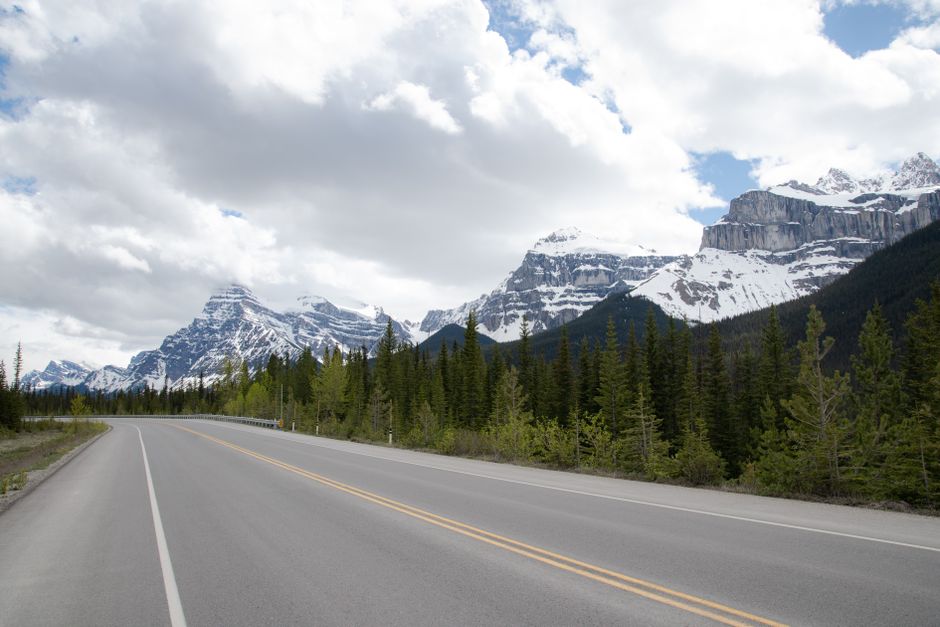
You arrive in Banff at 7 a.m., coffee in hand, expecting a quiet mountain morning. Instead, Lake Louise parking is already filling, a trail still has snow on it, and your phone keeps switching between one bar and nothing. That is the Canadian Rockies in June: spectacular, changeable, and easy to misjudge if you plan it like a regular summer holiday.
After driving the Banff-to-Jasper route more than once, I would book seven days, travel north, and treat the Icefields Parkway as a full-day experience rather than a transfer. This plan leaves room for weather, wildlife delays, trail closures, and the stops that make the route special.
What is the best seven-day Banff-to-Jasper itinerary in June?
My verdict: drive one way from Calgary to Banff, continue to Jasper, and leave from Jasper or Edmonton. A return drive wastes almost two days on the same highway. The route below gives you two nights around Banff, one night near Lake Louise, three nights in Jasper, and enough flexibility to change plans when mountain weather turns.
The route I would actually book
| Day | Route or base | Driving and priority |
|---|---|---|
| 1 | Calgary to Banff | 130 km; settle in, walk the Bow River, and buy groceries |
| 2 | Banff and Lake Louise | Book the required transport for Moraine Lake or Lake Louise; start before sunrise |
| 3 | Banff to Lake Louise | 60 km; Bow Valley Parkway, Johnston Canyon if open, and an early night |
| 4 | Lake Louise to Jasper | 232 km; allow 8 to 10 hours with stops on the Icefields Parkway |
| 5 | Jasper town and nearby lakes | Pyramid Lake, Patricia Lake, Athabasca Falls, and a flexible hike |
| 6 | Jasper backroads | Valley of the Five Lakes, Miette Hot Springs, or a weather backup |
| 7 | Jasper departure | Leave for Edmonton, fly from Calgary after a long transfer, or add a night |
Do not cram Moraine Lake, the Columbia Icefield, and Jasper into one day. The views deserve more time than a fuel stop. For 2026, check the official Parks Canada admission and pass information before booking; the Canada Strong Pass provides free admission from June 19 through September 7, 2026, while dates outside that window follow regular fees.
Is June the right month for Banff and Jasper?
Choose the second half of June if you want the best balance of open roads, long daylight, and fewer peak-summer crowds. Early June can still feel like spring at elevation, with snow beside the highway, icy trails, closed seasonal roads, and lakes that have not reached their famous blue colour, while late June usually gives you better access to hiking routes, greener valleys, and sunsets that remain bright well into the evening; the tradeoff is that school holidays and warmer weather begin to push parking lots toward their summer limits.
I prefer June to July for a first Canadian Rockies road trip because the mountains still look heavily snow-covered, wildlife often appears near lower-elevation roads, and you can sometimes find accommodation without paying the highest summer rates, but I would not choose June for a trip built around high alpine hiking, guaranteed sunshine, or a packed schedule of small trailheads.
Pack for a cold morning and a warm afternoon, keep one unscheduled day, and accept that a closed viewpoint does not ruin the trip; in the Rockies, the strongest plan is a route with room to move, not a list of twelve reservations that collapses when one storm arrives.
How should you drive the Icefields Parkway in June?
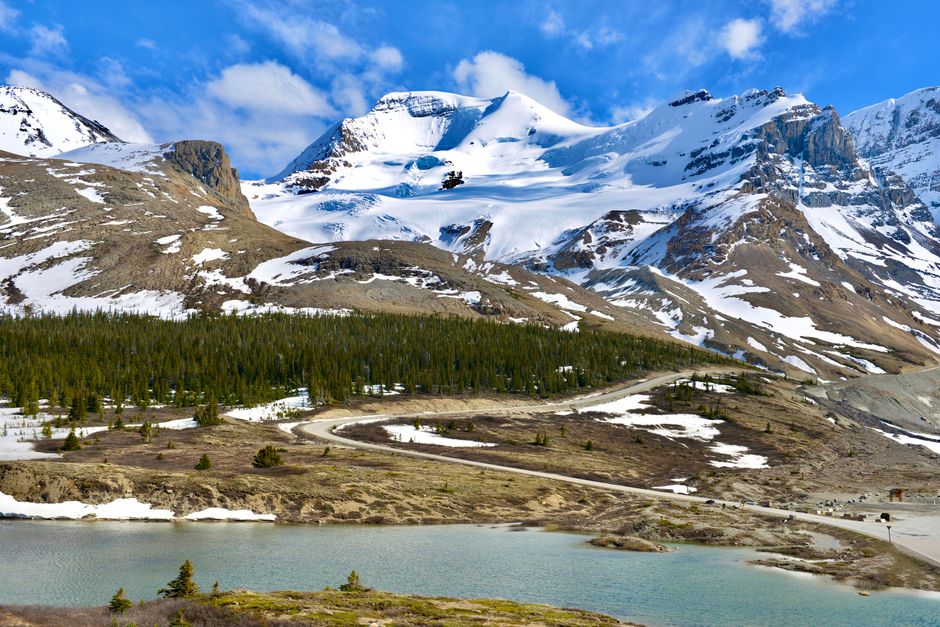
The Icefields Parkway exists because the mountains keep interrupting the road. The 232-kilometre drive between Lake Louise and Jasper passes turquoise lakes, avalanche paths, glaciers, waterfalls, and high summits, but services are limited and mobile coverage disappears for long stretches. I treat it as a remote mountain day, even though the pavement is good.
Start with fuel, food, and a realistic clock
Fill the tank in Lake Louise or Jasper. Do not assume the next fuel stop will be open when you arrive, and do not plan the route around a restaurant lunch. Carry sandwiches, fruit, water, and something salty. Leave early enough to reach the Columbia Icefield before the busiest part of the day, then stop at Bow Lake, Peyto Lake, the Saskatchewan River Crossing area, the Columbia Icefield Centre, Sunwapta Falls, and Athabasca Falls only if conditions and parking allow.
The direct driving time looks manageable on a map. It is not the useful number. A cautious June drive with photo stops, wildlife slowdowns, road work, and short walks takes most of a day. Large motorhomes need extra time on tight parking approaches, and some grades reach 8 to 11 percent near Bow Lake and Sunwapta Pass.
Expect four seasons above the valley
Banff town can feel warm while a high trail remains snow-covered. Wear waterproof shoes, carry a warm layer, gloves, and a rain shell even under clear skies. Never stop in the traffic lane for wildlife, and keep a large distance from elk, sheep, bears, and other animals. A roadside animal jam is not a safe photo opportunity.
Check Parks Canada road restrictions and Alberta 511 on the morning of departure. Navigation apps may show roads as available when seasonal restrictions, avalanche work, or emergency closures have changed access.
What mistakes ruin a June Rockies road trip?
These are the errors I see most often, including a few I made myself.
- Booking every night in one town. Banff is convenient, but staying there for the entire trip creates long return drives and makes Jasper feel rushed. Split the route into Banff, Lake Louise or Saskatchewan Crossing, and Jasper.
- Arriving at Lake Louise at midday. Go early, reserve the official shuttle or transport option required for your dates, and keep a second lake or valley walk ready. Mountain parking lots fill long before the scenery becomes less impressive.
- Assuming every famous Jasper stop is open in 2026. Cavell Road and Maligne Canyon remain closed for the 2026 season because wildfire recovery has left slope and debris-flow risks. Build your Jasper days around open alternatives such as Valley of the Five Lakes, Pyramid Lake, Athabasca Falls, and Miette Hot Springs.
- Buying a park pass without checking your dates. The Parks Canada Discovery Pass costs C$83.50 for one adult and C$167.50 for a family or group under regular 2026 pricing, but a trip between June 19 and September 7, 2026, falls within the free Canada Strong Pass admission period. Do not buy an annual pass solely for a week that already qualifies for free entry.
- Stopping in the wrong place for a photograph. Pull fully into signed viewpoints, keep the road clear, and never walk into a highway lane or approach wildlife. A five-minute photo is not worth a damaged rental car or a stressed animal.
My practical rule is simple: spend money on time, food, and a vehicle that fits the route before buying extra gadgets. A comfortable compact SUV with good tires beats a luxury vehicle that cannot fit at crowded trailheads.
Banff and Jasper June road trip questions answered
How many nights do you need between Banff and Jasper?
Seven days is my minimum for the classic route from Calgary to Banff, Lake Louise, the Icefields Parkway, and Jasper. Five days can cover the main highway, but the trip becomes a checklist: one rushed Banff day, one long transfer, and two Jasper mornings. Add a night if you want serious hiking, a glacier tour, or a weather buffer. If your flight schedule allows only five days, stay in Banff and Jasper rather than adding Yoho or Kananaskis.
What should you do if the weather closes a trail?
Drop elevation. Replace a high pass hike with the Bow River path, Johnston Canyon if the trail report allows it, a town walk, a museum, or a lower lake loop. In Jasper, use Pyramid Lake, the Valley of the Five Lakes, or an open section of the 93A corridor. Ask at a visitor centre for current trail conditions instead of trusting a two-year-old blog post. Snow and runoff can change a route overnight.
Should you stay in Banff or Jasper longer?
Give Jasper the extra night if you want quieter evenings, wildlife viewing, and more space between attractions. Give Banff the extra night if this is your first mountain trip and you care most about Lake Louise, Moraine Lake, restaurants, and easy access from Calgary. My own choice is two nights in Banff and three in Jasper, because the northbound drive already gives Banff the most dramatic transition into the mountains.
That opening morning in Banff feels different after the route is planned properly. You can leave before the parking lots fill, spend the whole day crossing the Icefields Parkway, and reach Jasper with enough daylight for a quiet lake walk instead of staring at a navigation screen wondering where the time went.

0