
Cairns in June: My Great Barrier Reef Verdict
Is Cairns warm and sunny in June?
Yes—June is the month I would choose for a first Cairns trip. The weather is warm enough for the reef, dry enough for rainforest walks, and far less humid than the summer months. Average June temperatures sit around 17.8°C overnight and 26°C during the day, with about 45.5 millimetres of rain across the month. That does not promise twelve perfect beach days, but it gives you the best odds of clear mornings and comfortable outdoor afternoons.
The catch is the light. Cairns has its shortest days in June, with sunrise around 6:45am and sunset close to 5:50pm. I book the reef early, then use the late afternoon for the Esplanade, a swim at the Cairns Esplanade Lagoon, or dinner near the marina. June is also peak season, so the good weather brings more visitors and higher demand for boats, hotels and rental cars.
The sea is not tropical-bath warm. Coastal water averages roughly 23.8°C to 24.5°C, which feels refreshing after a windy boat ride. A thin wetsuit or a supplied lycra suit makes a long snorkel much more enjoyable. My verdict is simple: choose Cairns in June for reliable winter sun, but pack one warm layer for dawn departures and reef crossings.
Why June works so well for the Great Barrier Reef
Dry-season visibility is the main advantage
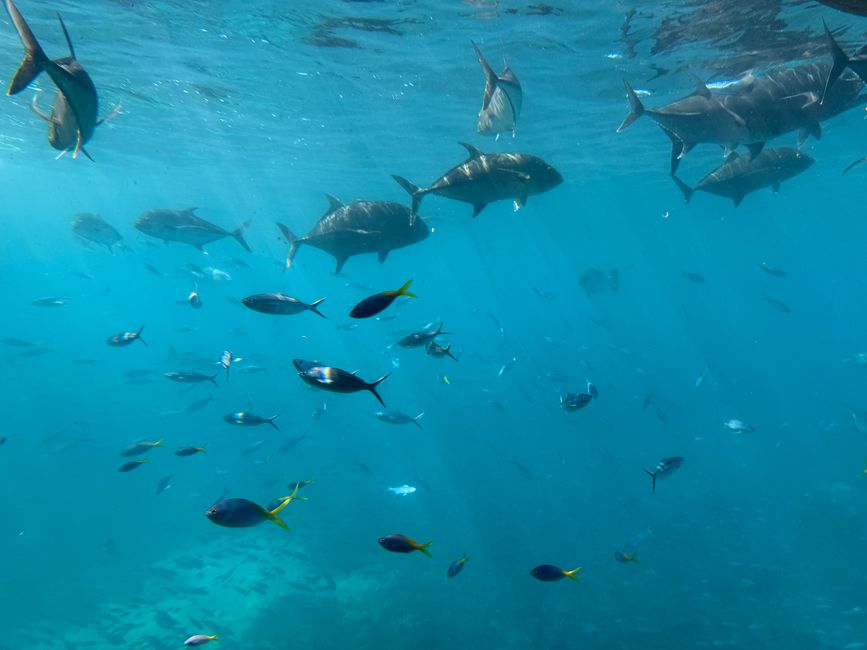
The reef is not a swimming pool, and visibility changes with wind, tide, rain and local currents. June sits inside the dry season, when lower rainfall often means cleaner water and better underwater light. That improves the experience for snorkellers because coral colour, reef fish and drop-offs are easier to see from the surface. It also helps divers who want to spend more time below the boat rather than waiting for poor conditions to settle.
Winter brings wildlife beyond the coral
June and July are strong months for whale sightings along the Queensland coast. The Ribbon Reefs north of Port Douglas are also known for seasonal dwarf minke whale encounters. Those sightings are never guaranteed, and a regular reef day should not be sold as a whale trip, but the chance adds something special to a winter itinerary. Turtles, reef sharks, rays and schools of tropical fish remain the more realistic wildlife targets.
Low stinger season does not mean no precautions
Stinger season is usually discussed as November through May, but June visitors should still listen to the crew. A stinger suit protects against more than one specific animal: it also helps with sun exposure, wind chill and accidental contact with coral. Never stand on coral, touch marine life or carry shells home. The reef exists as a living system, not as an underwater attraction built for visitors.
That is why I prefer June for a first visit. You get a better balance of dry weather, manageable heat, strong visibility and seasonal wildlife without the oppressive humidity of the wet season.
How I would plan a reef day from Cairns

A good reef day is won before the boat leaves the marina. I use this order because it protects the most weather-sensitive activity first and leaves easier alternatives for later.
- Put the reef on day two or three. Arrive in Cairns, sleep properly, then check the marine forecast and choose the first suitable morning. This gives you room to move the trip if wind or rain affects the crossing.
- Choose the destination before the boat. Outer-reef pontoons suit mixed groups and non-swimmers. Smaller vessels suit confident snorkellers who want more time in the water and less time around facilities.
- Reserve the earliest practical departure. Morning light is better for underwater photographs, and an early return leaves time for dinner, a lagoon swim or a backup activity.
- Pack for two climates. Bring swimwear, a dry shirt, towel, hat, sunglasses, reef-safe sunscreen, a refillable bottle and a light jumper. The jumper matters on the ride back when wet skin meets wind.
- Ask about medical rules before adding a dive. Introductory scuba diving can require a health declaration, and flying soon after diving creates a separate safety restriction. A snorkel-only day is the better choice if your schedule is tight.
Do not fill every hour after the reef. Boat days are tiring, even in calm weather. I leave the evening open and save a longer rainforest walk, such as Mossman Gorge or a Daintree excursion, for a separate day. That keeps a delayed return from wrecking the rest of the trip.
Will the water be too cold or the reef too rough?
Will I need a wetsuit in June?
Most visitors can enter the water without a full wetsuit, but comfort depends on how long you stay in. At roughly 24°C, the first few minutes may feel fine. After forty minutes of snorkelling, wind and repeated swimming can make you cold. I would accept the supplied short wetsuit for a full-day trip, especially for children, slim swimmers and anyone who feels chilled easily.
Is the reef rougher than Cairns harbour?
Yes. A calm Esplanade or marina says very little about the open sea. South-easterly trade winds can create a bumpy crossing, and motion sickness often becomes the real problem rather than the temperature. Sit near the middle of the vessel, face the horizon, eat a light breakfast and take approved medication before departure if you know you are prone to seasickness.
Can non-swimmers still enjoy the reef?
Yes, but a snorkelling-only boat is the wrong purchase for someone who does not want to enter the water. Choose a pontoon or island experience with semi-submersible viewing, glass-bottom boats, a swimming enclosure or guided assistance. You will see less coral detail from a viewing platform than from the water, but the day will feel far more relaxed.
My firm view is that rough seas should change the style of trip, not automatically cancel the reef. A flexible traveller can switch from a fast outer-reef boat to a sheltered island or pontoon format.
June mistakes that can spoil a Cairns trip
Booking the reef on your only available day
This is the biggest mistake. June is dry, not weather-proof. Wind can affect departures, visibility and comfort, so leave at least one spare day if the reef is a major reason for visiting. A non-refundable flight connection immediately after a boat return is another poor match.
Confusing warm air with warm water
Twenty-six degrees on land feels hot in the sun, but 24-degree water plus wind can feel cold. Bring a dry layer and use the protective suit offered by the operator. Pack a towel even when the forecast looks perfect.
Trying to combine everything in one day
The reef, Kuranda, the Daintree and Cape Tribulation all deserve space. A reef crossing followed by a rushed rainforest tour creates long transfers, little rest and a high chance of missing something. I would give the reef one full day, the rainforest another, and keep one flexible half-day for weather changes.
Assuming the beach is the reef
Cairns beaches are useful for walking, sunsets and scenery, but the best coral viewing usually requires a boat, island or pontoon trip. The Cairns Esplanade Lagoon is a good place to swim in town, not a substitute for seeing the Great Barrier Reef.
That is the practical answer to the winter-sun question I started with: arrive in Cairns expecting cool mornings, bright afternoons, a refreshing sea and one carefully chosen reef day. Pack a jumper, allow a weather buffer and choose the trip around your group’s ability. In June, that combination turns a hopeful escape from southern winter into a genuinely dependable tropical break.






0